
Dreaming of a Wolf: Instinct, Power, and the Call of the Wild
There’s a chill in the night when you awaken from a dream of a wolf. The image lingers — fur glinting beneath moonlight, eyes steady and ancient, breath misting between you. Awe and unease mix together, leaving you caught between fascination and fear.
To dream about a wolf is to step into that same wilderness within yourself. This is the creature of instinct and intuition, the part of you that moves by feeling rather than reason, that senses truth beneath appearances. Wolves rarely come to frighten; they come to awaken something that has slept too long.
Maybe you have always felt their pull, too. As a teenager, I would lose hours piecing together thousand-piece puzzles of wolves beneath a full moon, their silver shapes alive against the sky.
I was captivated by their mystery (and by werewolves and vampires who walked the same shadowed paths). Even now, a wolf’s distant howl feels strangely familiar, a reminder of freedom, loyalty, and the quiet honesty of the night.
Keep reading to explore what a wolf symbolizes in dreams, through psychology, mythology, and spirit, to uncover what your wild visitor may be trying to tell you.
Table of Contents
Understanding the Wolf
In nature, the wolf is a creature of profound intelligence and cooperation. Wolves live in tight-knit packs where loyalty and hierarchy are balanced by deep social bonds.
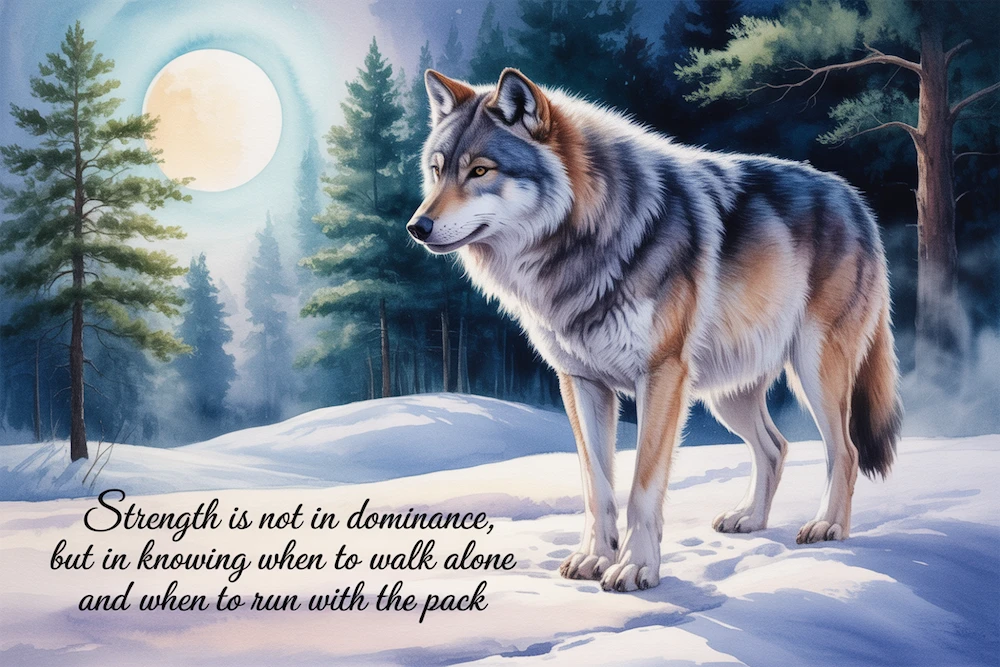
Yet, they are also capable of solitude, the lone wolf moving quietly through snow, alert and self-reliant.
Humans have long felt ambivalent toward wolves: admiration shadowed by fear. We see them as predators, protectors, and symbols of both danger and devotion. Their howls stir something primal, reminding us that beneath civilization, instinct still speaks.
To dream of a wolf, then, is to meet your own instinctual nature. It may ask:
Are you following your intuition, or have you learned to silence it?
Are you part of your “pack”?
Or wandering alone too long?
The wolf understands both belonging and independence, reminding you that true strength often means knowing when to stand with others and when to walk your own path.
The Personality of the Wolf
When interpreting your dreams, it can really help to think about the personality of the animal as if they were a human. For the wolf, they would be the quiet observer at the edge of the crowd, watchful, perceptive, patient.
They would sense motives without words, trust their gut, and fiercely protect those they love. The wolf is not quick to show their vulnerability, but underneath that calm exterior lives deep loyalty and empathy.
When they need to, the wolf knows they can rely on their friends to come to their aid and to work together as a team. The wolf, as a human, may enjoy team sports, family events or working in a busy, collaborative environment.
But they also value and enjoy their time apart from others, needing to be free to follow their instincts.
When this energy appears in dreams, it may mirror the part of you that moves through life by intuition. The skill to read silences, a room’s energy when you walk into it or to sense shifts in emotion before they are spoken.
Allow the wolf’s to remind you of your inner strength, not the kind that dominates, but the kind that endures, wild yet thoughtful, intensely yearning for connection.
How the wolf behaves in your dream, whether calm, staring, howling, or attacking, can further reveal how that instinct is expressing itself now.
Emotional Reactions and Dream Context
When it comes to interpreting your wolf dream, pay attention to the emotions you felt, as they add depth to the meaning.
Fear of the wolf may suggest inner conflict with your own power or instincts. Curiosity or calmness, however, may mean accepting your primal intuition and a readiness to trust yourself more fully.
If you dream of a wolf attacking, you may feel threatened by something wild or unpredictable in waking life. It can often be your own repressed strength or anger seeking recognition.
A wolf staring at you can symbolize awareness, asking you to face truths you have avoided, as you try to avoid their uncomfortable gaze.
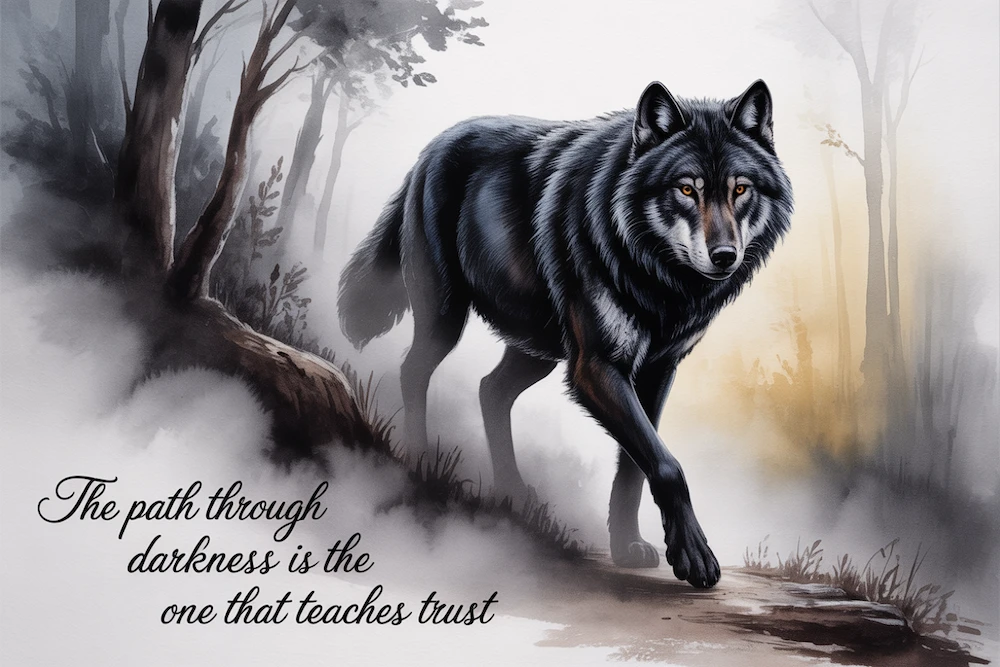
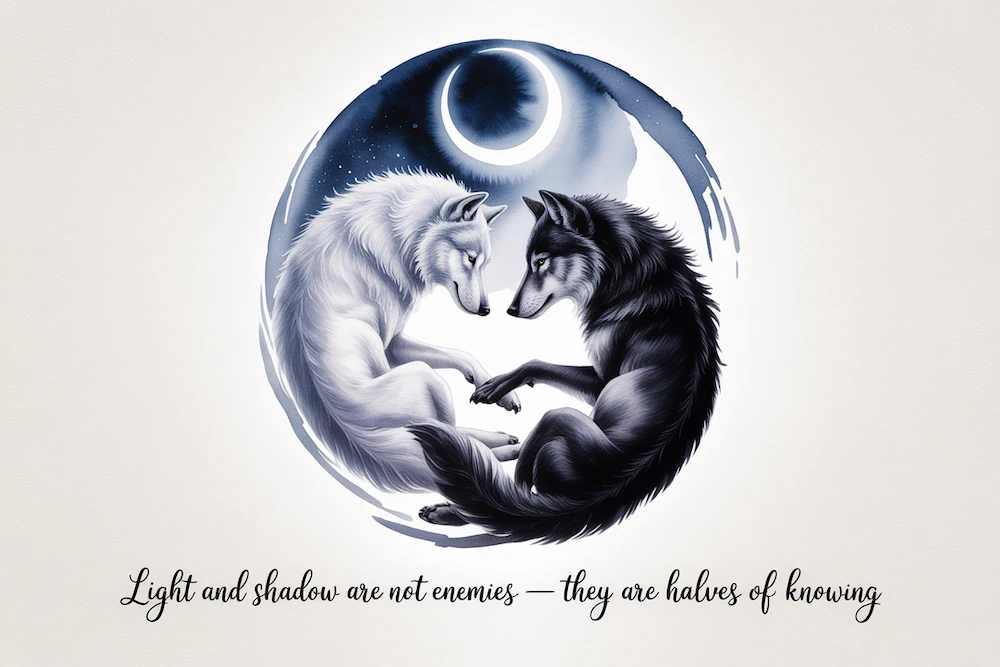
A white wolf may represent purity, guidance, or divine protection, whereas a black wolf often points to shadow work and hidden emotions.
Notice the setting, forest, snow, night, or home, as it may reveal where instinct meets emotion. The emotional tone of the dream is often the message itself.
Cultural, Mythological & Media Symbolism
The wolf has walked through every culture’s imagination, sometimes feared, sometimes revered, always unforgettable.
In Native American traditions, the wolf is a pathfinder and teacher. It symbolizes intuition, loyalty, and the sacred bond of the pack. To dream of a wolf here can mean that your spirit guide is calling you back to your instincts, reminding you to listen to the subtle language of energy and emotion.
In Norse mythology, the wolves Geri and Freki accompanied Odin, symbols of courage and fierce companionship. Yet another wolf, Fenrir, embodied chaos and raw untamed power, showing how the same energy that protects can also destroy when unbalanced.
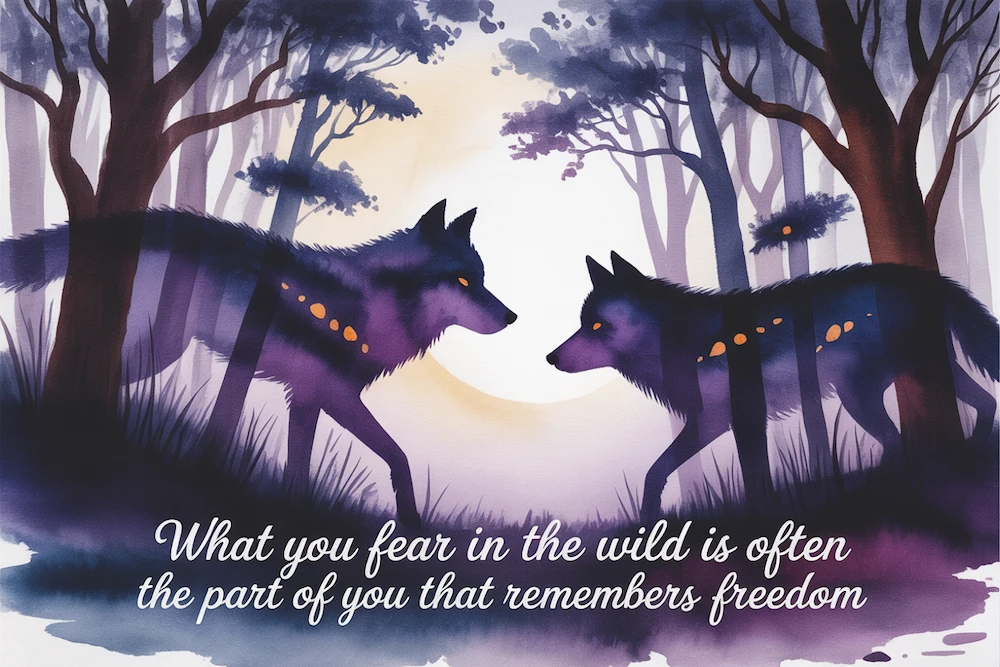
In European folklore, the wolf often became a creature of fear, from Little Red Riding Hood to medieval tales where it represented danger, desire, or deceit. But beneath those warnings lived a quieter truth: the wolf was never evil, only untamed. It reflected human fear of the wild within ourselves.
Modern stories, from werewolves to lone wolf heroes, carry that same paradox, we long for the freedom they represent, even as we fear losing control. They reflect a timeless pull: a yearning to understand the part of you that cannot be tamed, yet longs to belong.
These stories live within us, shaping how we respond when this animal walks into our dreams. This is what makes dream interpretation so personal, as you draw upon your own stories, culture and experiences.
Psychological Meaning of Wolf Dreams
On a psychological level, dreaming of a wolf brings you face to face with one of the oldest archetypes in the human psyche, the Instinctive Self. This is the part of you that senses before it knows, that moves from intuition rather than intellect.
Carl Jung might have called the wolf a symbol of the shadow, the instinctual and emotional forces we often repress in order to appear civilized.
Yet when the wolf visits your dreams, it is not to threaten you, but to reintegrate those instincts. It asks you to trust what you feel, not only what you think.
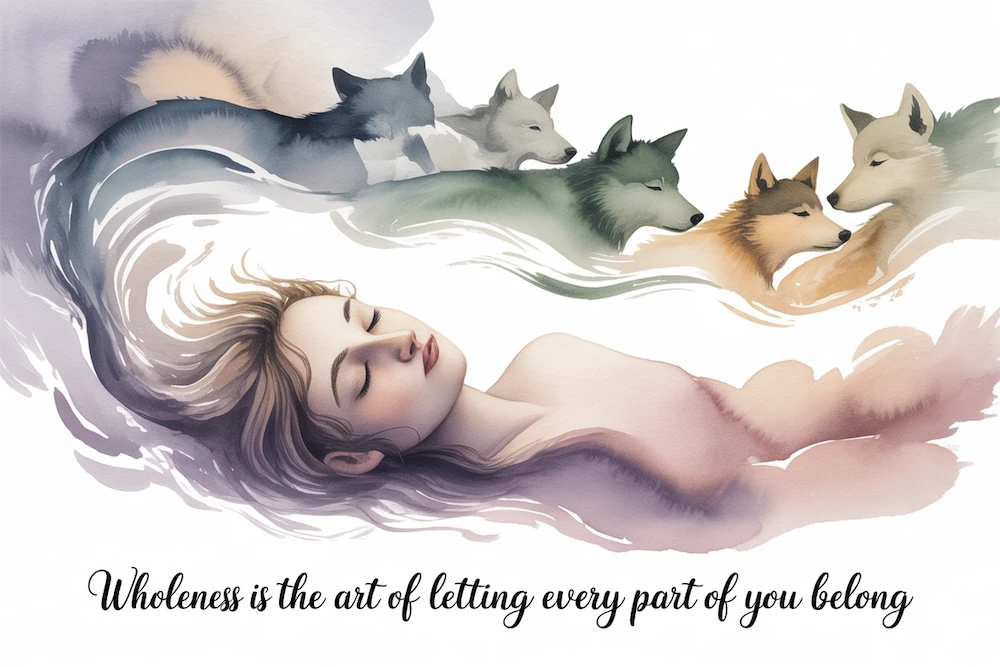
A calm or guiding wolf can represent the emergence of self-trust and authority.
A threatening wolf may reveal that you are resisting your own power or trying to control what needs to be free. If the wolf attacks, it may reflect inner conflict, an aspect of you fighting against transformation. But if it protects you, it may show that your instincts are maturing into strength.
The pack element of wolf dreams often speaks to belonging and social harmony. Are you trying too hard to fit into a group that does not understand your spirit? Or are you isolating yourself when connection could bring healing?
Spiritual Meaning of Wolf Dreams
On the spiritual side, the wolf is both guardian and guide. To dream of one is to be invited back into communion with your inner wilderness. The sacred rhythm where intuition, emotion, and awareness move as one.
The wolf is the teacher of instinctive wisdom. It appears when your soul wants you to listen more deeply, to your body, to the cycles of the moon, to the subtle nudges of fate.
Its presence reminds you that wildness is not chaos, but alignment with natural order.
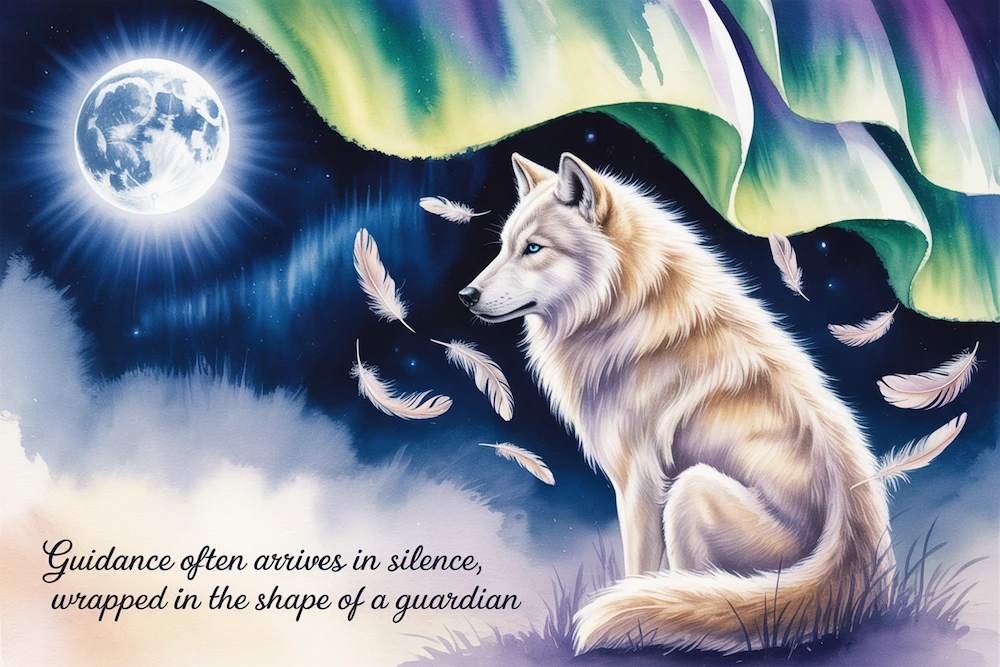
A white wolf in a dream often symbolizes protection or guidance from a higher realm, a reminder that purity and power can coexist.
A black wolf, by contrast, may appear as a shadow guide, leading you through mystery and transformation so you can reclaim what was once feared or hidden. Both carry medicine: one through light, the other through truth.
In spiritual systems, wolves connect with the moon and the element of air, bridging intuition and communication between seen and unseen worlds.
In tarot, they echo The Moon card itself, the path between illusion and revelation, fear and instinct. It suggests that sometimes things aren’t always as they seem.
In Lenormand symbolism, the wolf shares essence with The Dog, representing loyalty, trust, and inner guidance.
To dream of the wolf, then, is to be called to integration, to let the wild and wise within you move together. It asks: Can you follow your own call, even if no one else hears it?
What This Dream Is Teaching You (and How to Apply It)
A dream of a wolf may serve as a lesson in balance between solitude and connection, instinct and reason, freedom and trust. Each area of life revealing a different facet of its wisdom.
Relationships
The wolf reminds you that love must hold both loyalty and space. If you dream of wolves circling or howling, you may crave deeper emotional honesty or clearer boundaries. This dream teaches you that true connection does not silence individuality; it thrives on mutual respect.
Love fiercely, but do not lose your own wild voice.
Career & Work
In the professional realm, the wolf symbolizes intuition and strategic awareness. You may be sensing changes or unspoken tensions before others do. Trust those instincts, they are your compass.
Your intuition is a leadership skill, not a weakness.
Personal Growth & Identity
The wolf invites you to embrace the parts of yourself you once judged or hid. It may be asking you to integrate shadow traits, strength, sensuality, and assertiveness that were long suppressed. This integration leads to authenticity.
Wholeness comes when you stop taming what makes you powerful.
Family & Home
A wolf protecting its pack can reflect your role as a guardian or peacemaker. It may also reveal weariness from carrying too much responsibility. The dream urges balance, care for others, and also urges you to return to your own den when you need rest.
Protection includes protecting your own energy.
Health & Wellbeing
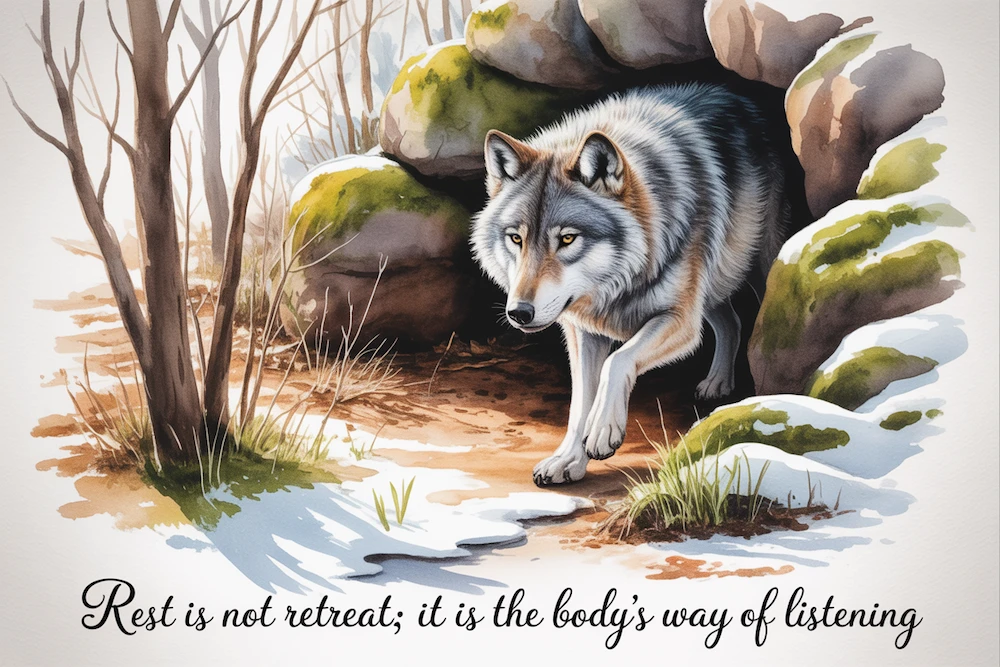
The wolf’s rhythm mirrors nature’s cycles: rest after exertion, silence before movement. Dreaming of it may signal the need to reconnect with natural rhythms, sleep, nourishment, solitude.
Your body’s instincts are sacred guidance. Listen closely.
Common Wolf Dream Themes
Here are some further ways the wolf may appear in your dreams and what each vision could be revealing.
Dreaming of a Wolf Attacking You
This often reflects an internal struggle with power or control. You may be resisting your own assertiveness or fearing someone’s dominance. The attack symbolizes energy seeking release, courage wanting to be reclaimed rather than repressed.
Dreaming of a Wolf Staring at You
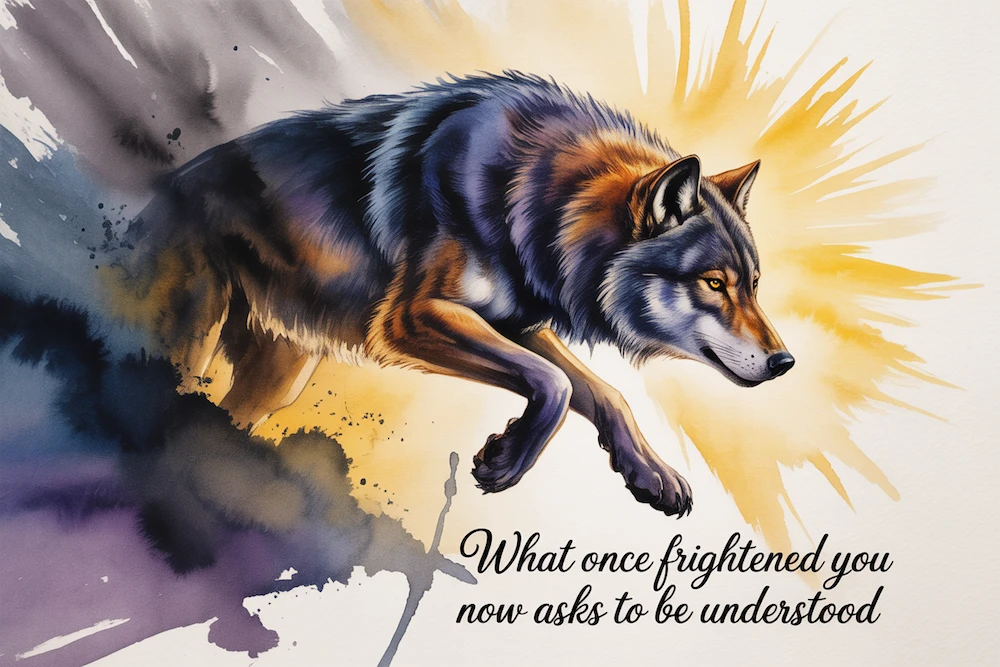
When a wolf’s gaze meets yours, the dream asks for honesty. Something in your waking life requires truth, perhaps a relationship or decision you have avoided. The stare is not aggression but invitation: to face what you already know.
Dream of a White Wolf
A white wolf signifies spiritual protection and purity of instinct. It may appear during times of change, guiding you to act with integrity and calm courage. Its presence suggests you are being watched over, even in uncertainty.
Dream of a Black Wolf
The black wolf represents mystery, transformation, and shadow healing. It may lead you through emotional depth, loss, fear, or change, so you can uncover hidden strength. It does not threaten you; it tests your trust in your own wisdom.
Dream About a Wolf Attacking Your Family
This scenario can express fear of losing control or being unable to protect those you love. It may mirror tension or conflict within close relationships. The wolf’s aggression symbolizes an urgent need to restore safety and honesty within the “pack.”
Dream of a Friendly Wolf
A friendly or companionable wolf reflects trust in your instincts and balance between your rational and wild selves. You may be entering a period of harmony where intuition guides without fear.
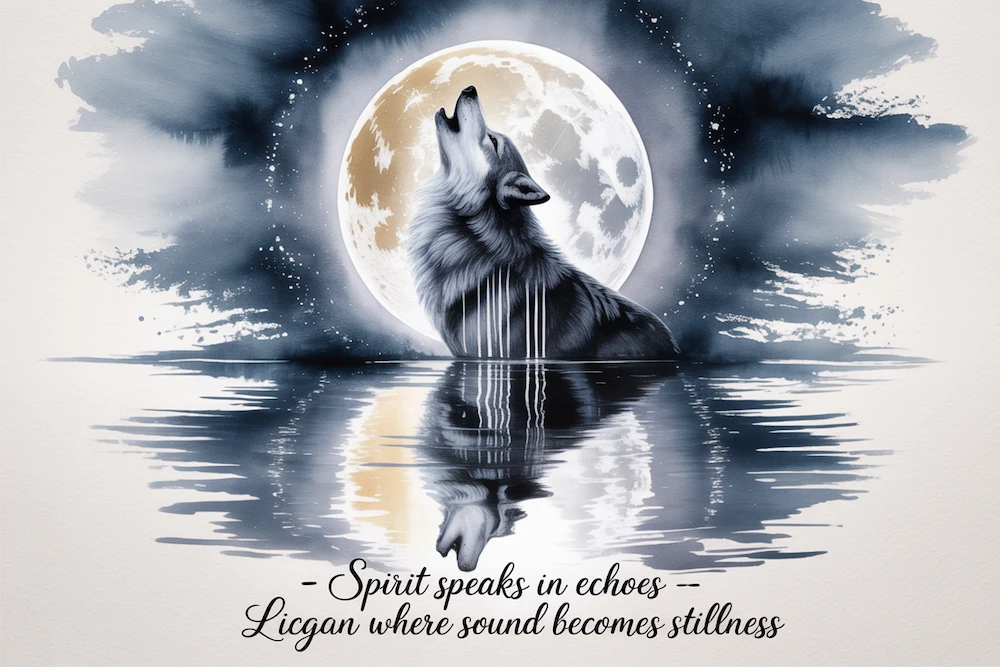
Dream About a Lone Wolf Howling
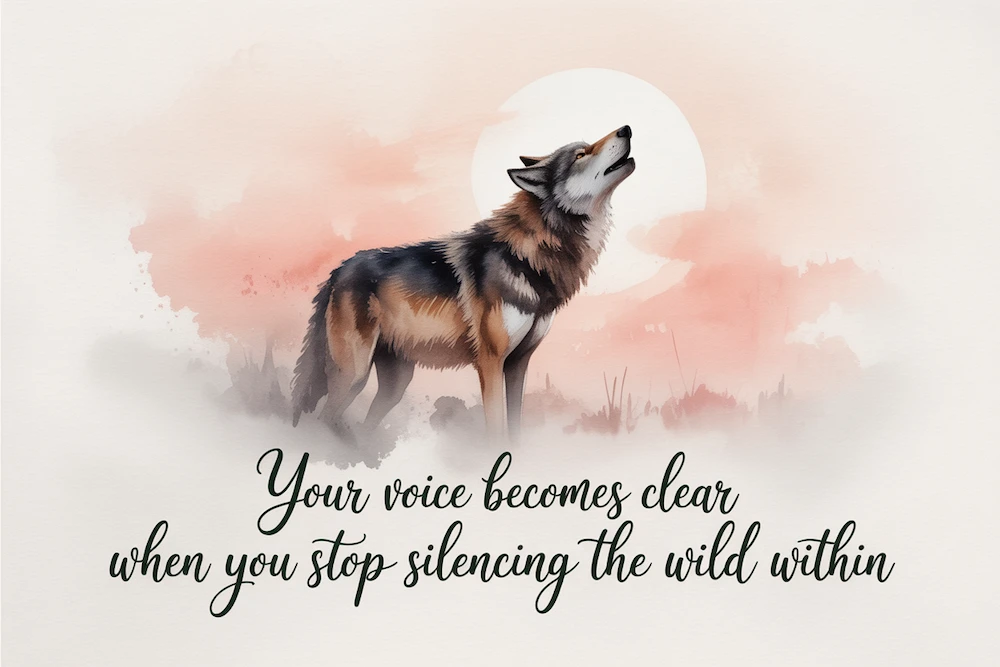
The howl speaks to longing, for freedom, recognition, or communion where solitude is not emptiness but the opportunity to find your voice, without the influence or pressure from others.
Dreaming of Werewolves or Half-Human Wolves
These dreams often connect to transformation and suppressed emotion. They symbolize the tension between civilized control and instinctive passion. There may be a powerful message here in your dream: do not fear your intensity; instead, learn to channel it consciously.
FAQ About Wolf Dreams
Here are some more questions you may have about dreams of a wolf.
What does it mean when I keep dreaming about wolves?
Recurring wolf dreams suggest an ongoing conversation between your conscious self and your instincts. Your inner world may be asking you to trust intuition, reclaim confidence, or face fears you have outgrown.
The repetition means the message is important; it will linger until you listen.
What does a wolf symbolize in a dream spiritually?
Spiritually, the wolf is a guide to awakening. It reminds you that your intuition and independence are divine tools, not to be ignored. That anyone can develop them with patience and trust.
The wolf’s presence in your dream may indicate that your higher self is calling you to reconnect with your purpose, honesty, and the natural flow of your spirit.
What if the wolf in my dream was black or white?
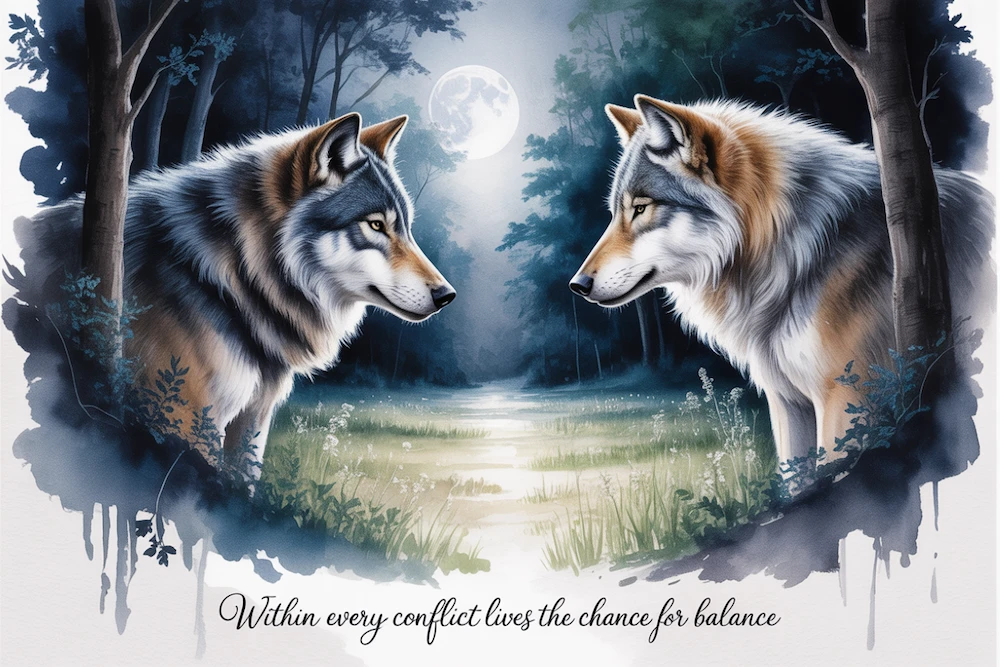
A white wolf often signals protection, higher guidance, or peace after struggle. A black wolf represents shadow work, mystery, or the power that comes from embracing what you once feared. Both are sacred, one brings light, the other depth.
Is dreaming of a wolf attacking always negative?
Not necessarily. The attack may symbolize energy breaking free, anger, truth, or courage that you have been avoiding. It can also highlight a relationship or situation where power feels out of balance. Look beyond fear to the lesson about strength and boundaries.
What does it mean to dream of wolves in Islam or biblical symbolism?
In Islamic interpretations, a wolf can represent a cunning enemy or, at times, the presence of truth hidden beneath deceit, urging discernment and self-protection.
In biblical symbolism, the wolf may represent false prophets or spiritual testing, yet in deeper texts, it also embodies vigilance and the need to guard one’s faith. The meaning depends on the emotion and context, not the label alone.
Why do I dream of wolves during times of change?
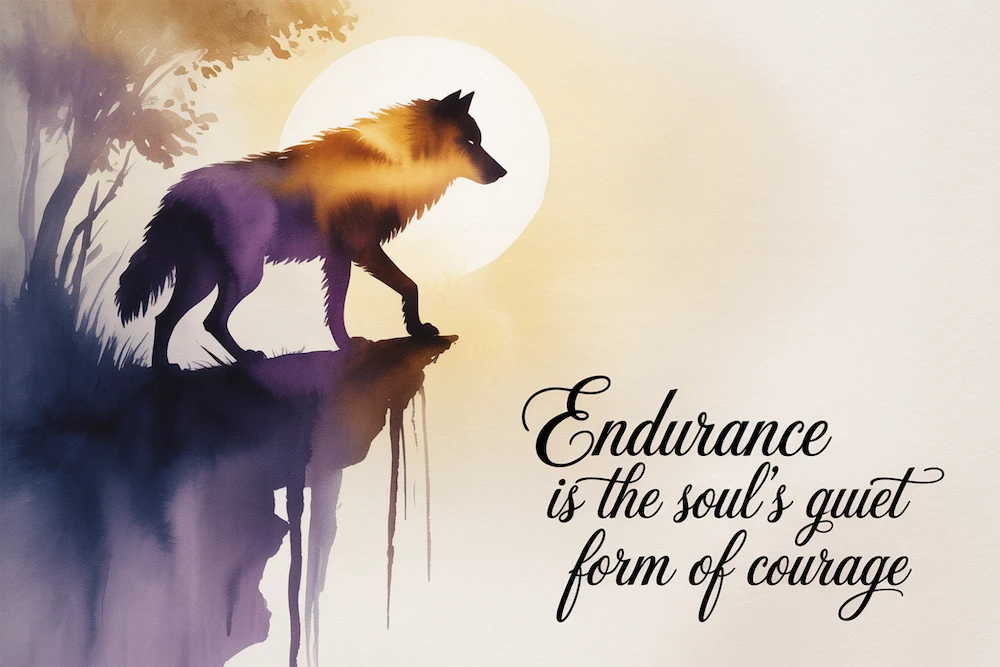
Because the wolf walks with transformation, and it appears when instinct, courage, and clarity are needed. In seasons of change, the dream assures you that you already carry the wisdom to navigate what is unfolding.
Dream interpretation is never about certainty; it is an art of listening, a dialogue between soul and symbol. Take what resonates from dream guides and stay open to letting your intuition speak in the quiet moments of the day.
Reflection Prompts
When unpacking the meaning of your dream, it can help to spend a peaceful moment dream journaling. Wolf dreams often mark thresholds of change, and journaling about them helps you hear their guidance clearly.
Here are a few questions to explore in your dream journal or meditation practice:
Let these reflections unfold gently. They are not puzzles to solve, but doorways to deeper knowing.
Dreaming of a wolf is like hearing an ancient song rise from the forest within you. It is neither threat nor fantasy, it is remembrance. The wolf calls you back to instinct, to belonging, to your own clear-eyed strength.
So when the wolf appears again, do not turn away. Let it walk beside you for a while. Listen to its steady breath. There, between the sound and silence, you will find what the dream has been whispering to you.
If your dream of a wolf stirred something deep within you, you might enjoy exploring how spirit animals guide us through our dreams. Each carries its own kind of wisdom — discover more in Guided by Spirit Animals: The Secrets in Your Dreams.
